Home Environment and Students' Creative Thinking: An Educational Data Science Analysis of PISA 2022
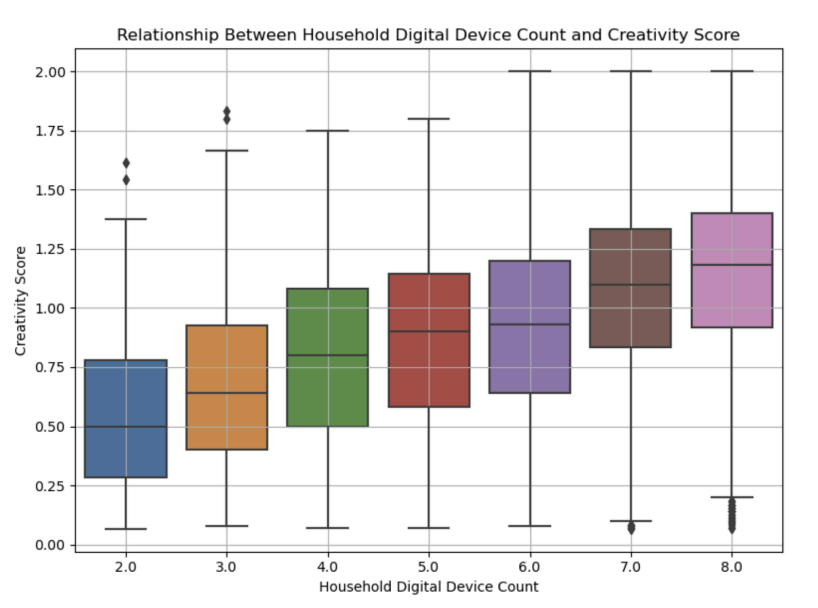
This study investigates how student exposure to resources in their home environments relates to creative thinking performance, using data from the PISA 2022 Creative Thinking assessment. It focuses on two primary questions: (1) How strongly is exposure to cultural, educational, and digital resources associated with creativity? (2) Do students perform better on divergent thinking tasks when physically engaged or digitally stimulated?
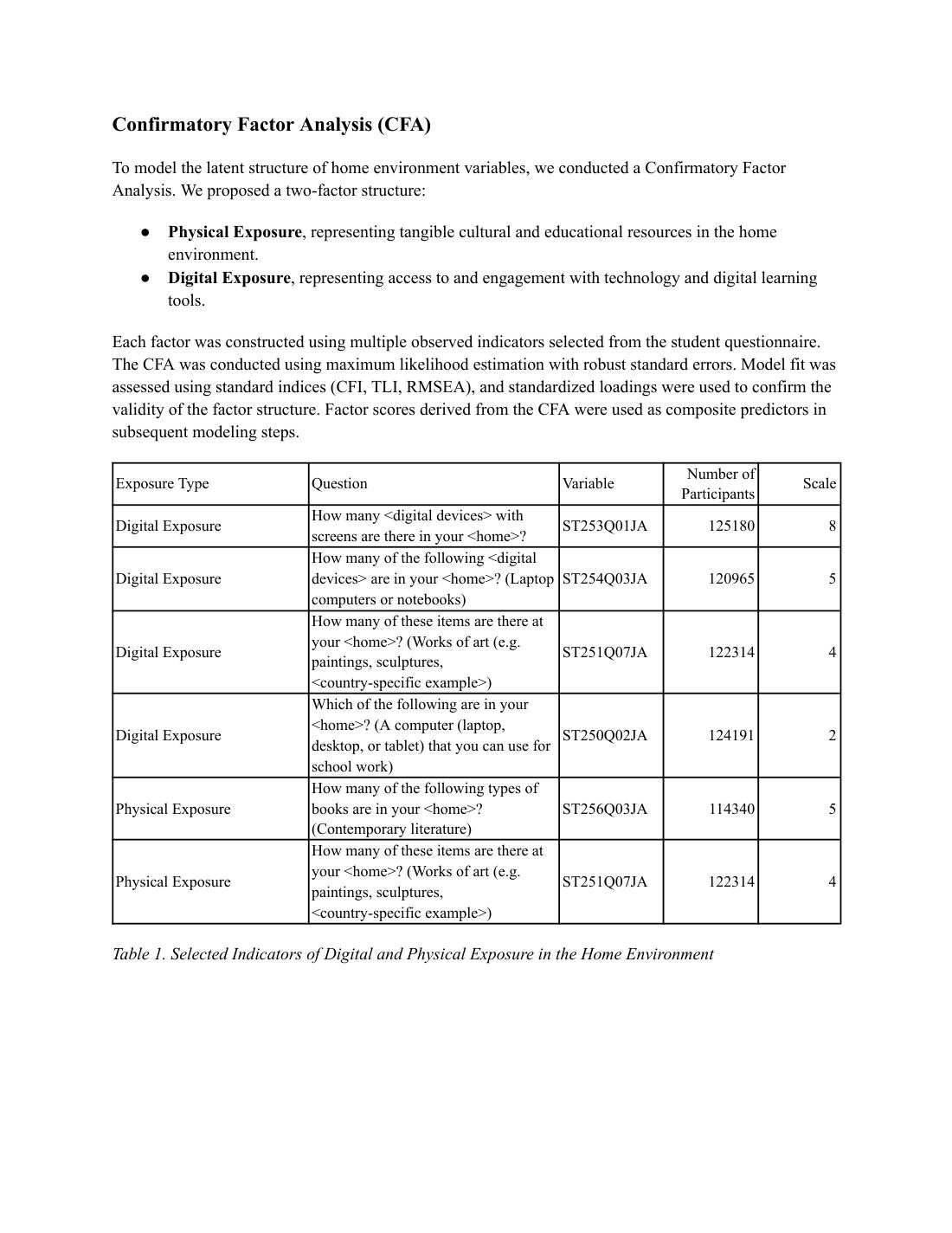
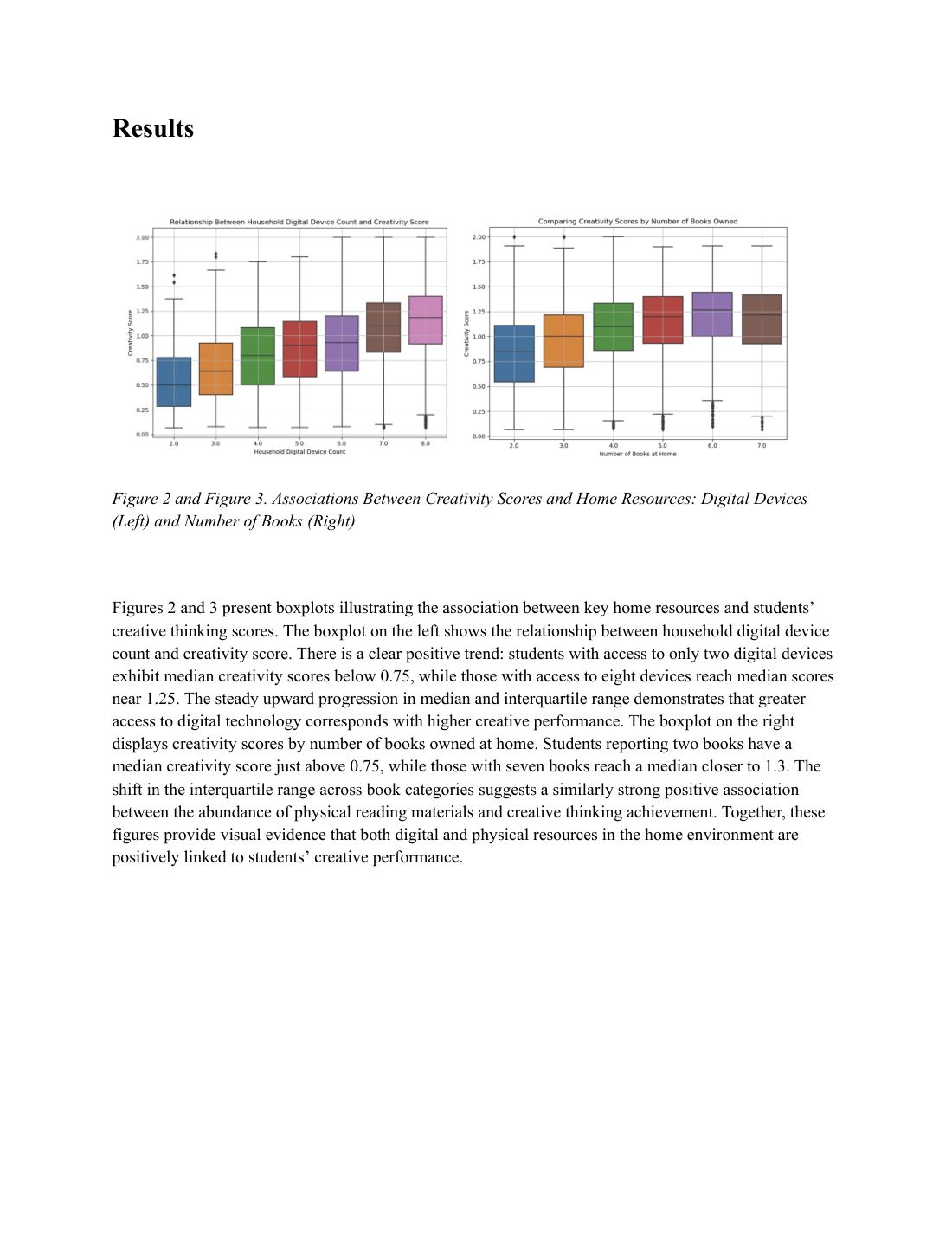
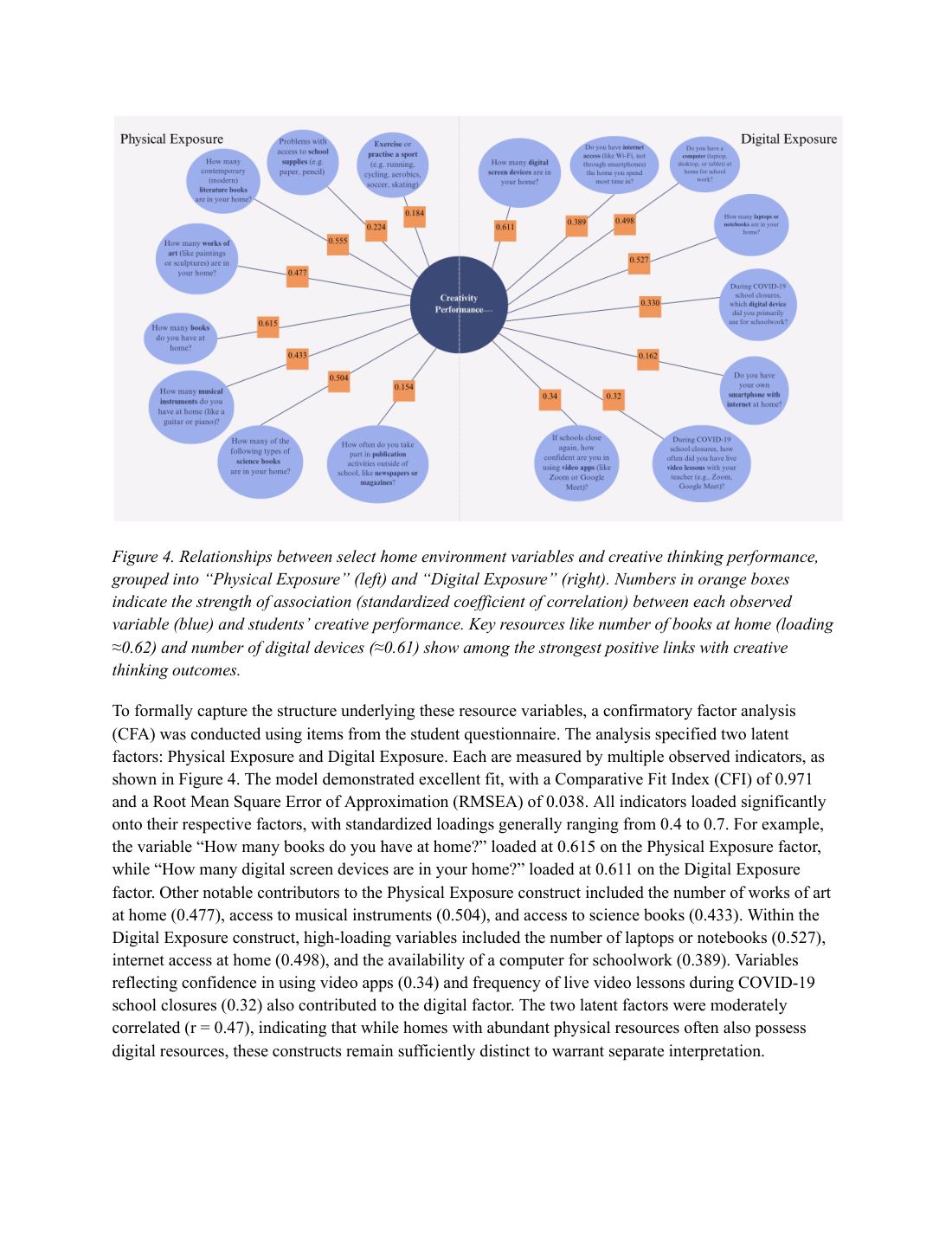
Drawing on a sample of 15,425 students from 60 countries, the study applies high-dimensional regression and factor analysis to identify patterns across a wide range of exposure variables. A Confirmatory Factor Analysis specified two latent factors, Physical Exposure and Digital Exposure, with excellent model fit (CFI = 0.971, RMSEA = 0.038). When both factors were entered together in the regression, physical and digital exposures each contributed unique explanatory power — they appear to be complementary dimensions of a creative home environment.
The findings offer international evidence that both physical and digital resources in the home play significant, independent, and complementary roles in shaping adolescent creative thinking, with direct implications for efforts to promote creativity and equity in education.